Spraying your car at home is a rewarding project that can save you thousands, but it demands the right equipment. The heart of any paint booth setup is the air compressor, providing the consistent, clean, and dry air your HVLP gun needs for a flawless, professional-looking finish. Choosing the wrong compressor can lead to a host of problems, from orange peel texture to sags and runs in the paint.
Your compressor’s tank size, CFM (cubic feet per minute) delivery, and PSI (pounds per square inch) are critical factors. A unit that’s too small will constantly cycle on and off, introducing moisture and pressure drops that ruin a paint job. This guide breaks down the best air compressors for at-home car painting, from compact options for small touch-ups to large stationary units for complete resprays.
The Best Air Compressors for Your Home Garage Paint Job
- DEWALT Air Compressor, 225-PSI Max, Hand Carry with Wheels
- CAMPBELL HAUSFELD 30 Gallon Horizontal Air Compressor
- Klutch 60-Gallon Single-Stage Vertical Air Compressor
- Stealth Air Compressor 2 Gallon, Ultra Quiet Electric Air Compressor
- CAMPBELL HAUSFELD 60 Gallon Vertical Air Compressor 230V
- Senco PC1010 1-Gallon Portable Hot Dog Air Compressor
- California Air Tools 10020C Ultra Quiet and Oil-Free Air Compressor
- CRAFTSMAN 33 Gallon Air Compressor, 175 Max PSI
- Klutch 20-Gallon Air Compressor, 2 HP, 120 Volts
- NorthStar Portable Gas Air Compressor — 21 CFM at 100 PSI
DEWALT Air Compressor, 225-PSI Max, Hand Carry with Wheels

The DEWALT D55146 is a highly portable and robust option for smaller painting projects or spot repairs. Its 4.5-gallon tank, combined with a high 225 PSI max pressure, provides a solid reserve of usable air, which helps maintain consistent pressure at the spray gun. The inclusion of wheels and a handle makes it easy to position exactly where you need it in the garage.
This unit features a protective metal console that houses large, easy-to-read gauges and a regulator, allowing for precise pressure control—a must for quality paint application. The high-flow coupler helps maximize the performance of your tools by minimizing pressure drop. For a compact compressor, it delivers reliable power that can handle an HVLP gun for shorter durations without constant motor cycling.
CAMPBELL HAUSFELD 30 Gallon Horizontal Air Compressor
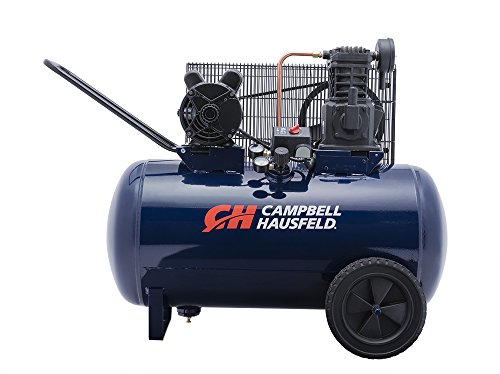
Balancing capacity with a relatively portable footprint, the Campbell Hausfeld 30-gallon compressor is a great middle-ground for home painters. Its 3.7 HP motor delivers 10.2 CFM at 90 PSI, which is sufficient for many HVLP spray guns, allowing you to paint larger panels without frequent interruptions. The horizontal tank design is stable and can be fitted with a wheel kit for easier movement around the workshop.
As a 230-volt unit, it provides the necessary power for continuous operation during a paint job. This compressor is built for demanding applications, making it a reliable partner for not just painting, but for a variety of garage tasks. Its performance characteristics place it firmly in the category of being able to handle a complete car respray for a dedicated DIYer.
Klutch 60-Gallon Single-Stage Vertical Air Compressor
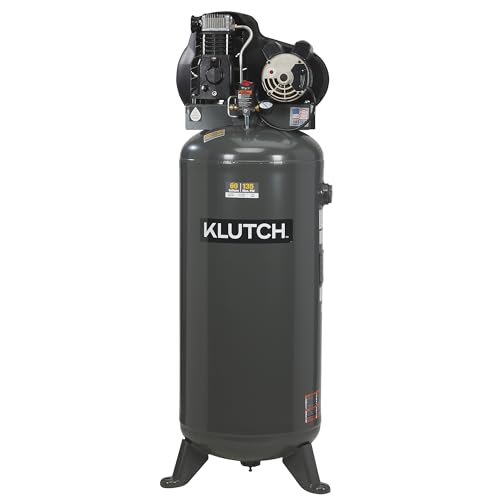
For the serious enthusiast planning a full vehicle paint job, the Klutch 60-gallon compressor offers substantial air capacity. The large tank volume means the motor cycles less often, providing a steady stream of air that is crucial for achieving a uniform coat of paint without defects. Its 3.7 HP motor produces 9.3 CFM at 90 PSI, meeting the demands of most automotive spray guns.
The cast iron, oil-lubricated pump is designed for durability and long life, making this a compressor that can serve your workshop for years. The vertical design saves valuable floor space in the garage. This unit is a workhorse, intended for users who need professional-grade performance for extended run times during priming, painting, and clear-coating.
Stealth Air Compressor 2 Gallon, Ultra Quiet Electric Air Compressor

The Stealth air compressor is defined by its exceptionally quiet operation, rated at less than 60 dB. This is a major benefit if you need to work in a noise-sensitive environment, like a residential garage with neighbors close by. Its oil-free pump means less maintenance and no risk of oil contamination in your paint lines, which is essential for a perfect finish.
While its 2-gallon tank is best suited for smaller tasks, it can power a touch-up spray gun for minor work. The 125 PSI max pressure ensures you have adequate force for the application. This compressor is an excellent choice for detail work, small projects, or for users who prioritize a quiet workspace above all else.
CAMPBELL HAUSFELD 60 Gallon Vertical Air Compressor 230V
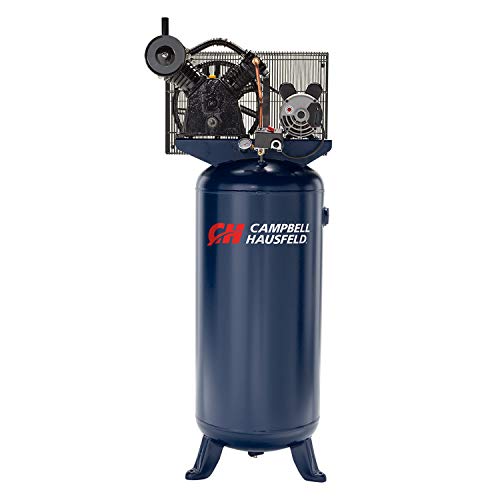
This Campbell Hausfeld model is a top-tier choice for a dedicated home garage. The two-stage, oil-lubricated pump and massive 60-gallon tank are built for continuous, heavy-duty use, making it ideal for spraying entire cars without worrying about the compressor struggling to keep up. A high 175 PSI max pressure provides a significant reservoir of usable air for your spray gun.
The two-stage operation means the air is compressed in two steps, which is more efficient and generates less heat, leading to drier air and better paint results. This compressor is an investment for the avid DIYer or hobbyist who requires professional-level performance and reliability for extensive automotive work.
Senco PC1010 1-Gallon Portable Hot Dog Air Compressor
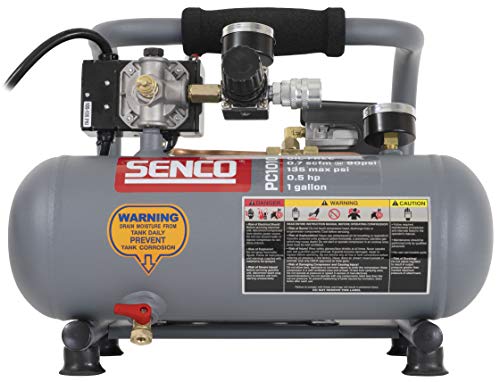
The Senco PC1010 is the definition of compact and portable. Its lightweight “hot dog” tank design is easy to carry and store, making it perfect for very small painting tasks, like touching up a bumper or spraying a small accessory. While its 1-gallon tank limits continuous spray time, it can be sufficient for a dedicated, low-CFM touch-up gun.
This compressor is incredibly easy to operate and maneuver. It’s a practical option for those with minimal storage space or for someone who needs a secondary compressor for small jobs. Its primary strength is its portability and simplicity for light-duty applications.
California Air Tools 10020C Ultra Quiet and Oil-Free Air Compressor

California Air Tools is renowned for its quiet compressors, and this 10-gallon model is no exception, operating at only 70 dB. The oil-free pump eliminates maintenance and the risk of contaminating your paint with oil, which is a critical factor for a high-quality finish. The 10-gallon steel tank offers a good balance between capacity and size for a garage.
With a 2.0 HP motor that delivers 5.30 CFM at 90 PSI, it can handle many HVLP spray guns for smaller projects or partial paint jobs. The inclusion of wheels enhances its portability. This unit is an excellent all-around choice for the home user who values quiet operation and clean, maintenance-free air.
CRAFTSMAN 33 Gallon Air Compressor, 175 Max PSI

The CRAFTSMAN 33-gallon compressor hits a sweet spot for home garage use. Its oil-free pump technology means you can install it and focus on your project without worrying about routine oil changes. The vertical design is space-efficient, and the 175 PSI max pressure ensures you have plenty of power for your paint gun and other air tools.
This compressor is built for heavy-duty use and is designed to be both efficient and reliable. The tank size is substantial enough to support the continuous air flow required for painting larger sections of a car, making it a very capable and practical option for the serious DIY mechanic and painter.
Klutch 20-Gallon Air Compressor, 2 HP, 120 Volts

The Klutch 20-gallon model is a versatile compressor that runs on a standard 120-volt household outlet, making it accessible for almost any garage. Its oil-free pump reduces maintenance, and the 4.2 SCFM at 90 PSI output is respectable for its class, capable of running many HVLP spray guns with careful management.
Features like thermal overload protection safeguard the motor during prolonged use, which can occur during a long painting session. This compressor offers a great blend of capacity, convenience, and user-friendly operation for the home hobbyist looking to tackle painting projects without needing special electrical wiring.
NorthStar Portable Gas Air Compressor — 21 CFM at 100 PSI
For ultimate flexibility and high-demand performance, the NorthStar gas-powered compressor is in a class of its own. Its massive 21 CFM output far exceeds what most electric models can produce, easily powering any automotive spray gun and then some. Because it’s gas-powered, it doesn’t require a 230-volt outlet, making it perfect for remote locations or shops without robust electrical service.
This compressor is the solution for those who need industrial-level air flow for painting large vehicles or for operating multiple tools. Its portability means you can take it anywhere, independent of power sources. If your projects demand the highest CFM and you need the freedom to work anywhere, this is the compressor to consider.
Buying Guide: How to Choose the Right Air Compressor for Your At-Home Car Painting Project
Choosing the right air compressor for painting a car at home can feel overwhelming, but it really comes down to understanding a few key specs. I’ve learned from experience that getting this wrong means a finish full of sags, orange peel, or worse. The most critical factor is consistent, clean, and sufficient airflow. Let’s break down what you actually need to look for.
First, let’s talk about CFM, or Cubic Feet per Minute. This is the volume of air the compressor can deliver. For painting, you need to match the CFM requirements of your spray gun. Most HVLP (High Volume Low Pressure) spray guns, which are great for beginners, need somewhere between 10 and 20 CFM at the operating PSI. My rule of thumb is to find a compressor that can deliver at least 20-30% more CFM than your spray gun’s maximum requirement. This gives you a buffer and ensures the compressor isn’t running at its absolute limit the entire time, which leads to overheating and moisture in your air line.
Next is PSI, or Pounds per Square Inch. While your spray gun might only operate at around 30 PSI, your compressor needs to have a higher max PSI, typically 90-150 PSI, to build up and maintain that pressure in the tank. The tank size is the other half of this equation. A larger tank, say 30 gallons or more, holds more air, which means the compressor motor doesn’t have to kick on as frequently. This is crucial for maintaining a consistent air pressure while you’re making long, continuous passes with the paint gun. A small, “pancake” compressor will run constantly and still struggle to keep up, ruining your paint job.
You also can’t ignore the power source. For a home garage, a 120-volt electric compressor is usually the most practical, as it plugs into a standard household outlet. If you have access to 240-volt power, you can consider larger, more industrial models that deliver higher CFM. Don’t forget about the duty cycle, either. A 100% duty cycle means the compressor can run continuously. For a multi-hour painting job, you want a compressor with a high duty cycle, ideally 50% or more.
Finally, think about the practicalities. How loud is it? A quieter compressor (below 80 decibels) is a blessing in a home garage. Does it have wheels and a handle for easy movement? And most importantly for painting, you must use proper filtration. This means an air dryer and a regulator/filter combo at the compressor to remove moisture and oil from the air stream. Even the best compressor will spit contaminants into your paint line without this. Picking from the list of the 10 best air compressors for at-home car painting is easier once you have these fundamentals in mind.
FAQ
What size air compressor do I absolutely need to paint a car?
You need a compressor that can deliver a high, consistent CFM. I wouldn’t recommend anything smaller than a 20-gallon tank with a CFM rating of at least 12-15 at 40 PSI. For a full-size car or truck, a 30-gallon or 60-gallon compressor is even better. The goal is to have enough air volume so the compressor motor isn’t cycling on and off constantly during your paint spray, which causes pressure drops and a poor finish.
Can I use a small, portable 6-gallon pancake compressor for car painting?
I strongly advise against it. While it might be technically possible with a very small, low-CFM touch-up gun, the results will be disappointing. A small pancake compressor lacks the air reservoir and continuous CFM output needed for the large, consistent airflow a basecoat or clearcoat requires. It will run non-stop, overheat, and introduce moisture into your air line, leading to a ruined paint job.
Is an oil-less or oil-lubricated compressor better for painting?
This is a classic debate. Oil-less compressors are lighter, require less maintenance, and are cheaper, but they are much louder and have a shorter lifespan. Oil-lubricated compressors are typically quieter, more durable, and can run for longer periods, making them better for the extended runtime of a paint job. The key with an oil-lubricated model is ensuring you have excellent filtration to catch any potential oil carry-over, which can cause fisheyes in the paint.
Why is an air filter and water separator so important?
Compressed air contains moisture and, in oil-lubricated models, tiny oil particles. If this contaminated air makes it to your spray gun, it will get mixed into your paint and land on your car’s surface. This causes a host of problems like fisheyes, pinholes, and poor adhesion. A high-quality filter/regulator and a dedicated air dryer are non-negotiable for a professional-looking finish. It’s one of the most critical parts of your setup.
What’s the difference between a single-stage and two-stage air compressor for this task?
For most at-home projects, a single-stage compressor is perfectly adequate. It compresses the air in one piston stroke. A two-stage compressor compresses the air in one cylinder and then sends it to a second, smaller cylinder for further compression, resulting in higher pressure and greater efficiency. They are more expensive and are really for professional shops with constant, heavy use. When reviewing the 10 best air compressors for at-home car painting, you’ll find most are robust single-stage models.
How do I know if my home electrical system can handle a larger compressor?
This is a vital safety question. Most 20-30 gallon compressors run on a standard 120-volt, 15-amp circuit. However, larger 60-gallon models often require a 240-volt outlet, similar to an electric dryer. You must check the amp draw of the compressor motor and compare it to the circuit breaker you plan to use. It’s always a good idea to consult an electrician if you’re unsure, as running a high-draw tool on an inadequate circuit is a fire hazard.