Finding the right adhesive to bond rubber to plastic can be a frustrating challenge. These two materials have very different surface properties, and using the wrong glue can lead to a weak bond that fails quickly or even damages the surfaces. Whether you’re repairing a car interior component, fixing a household item, or working on a craft project, the integrity of your project depends on selecting a specialized adhesive designed for this specific task.
This roundup simplifies your search by highlighting the best adhesives for creating a strong, durable bond between rubber and plastic. We have evaluated products based on their formulation, ease of use, bond strength, and suitability for various applications. From fast-setting instant glues to gap-filling epoxies, you’ll find the perfect solution to ensure your repair or creation holds up over time.
The Best Adhesives for Rubber-to-Plastic Bonds
- 3M Scotch-Weld Plastic & Rubber Instant Adhesive PR40
- Gorilla Super Glue Gel XL, Clear Glue, 25 Gram
- J-B Weld 33120H SuperWeld Glue – Clear Super Glue
- 3M Scotch-Weld Plastic & Rubber Instant Adhesive PR1500
- Gorilla Max Strength Construction Adhesive, Clear Glue
- Gorilla Clear Grip Waterproof Contact Adhesive
- J-B Weld 50139 Plastic Bonder Body Panel Adhesive
- Barge All Purpose Cement, Original
- Loctite Plastics Bonding System
3M Scotch-Weld Plastic & Rubber Instant Adhesive PR40

For projects requiring a fast and reliable bond, the 3M Scotch-Weld PR40 is a top-tier choice. This low-viscosity, clear instant adhesive is specifically engineered to bond a number of substrates, including various plastics and rubbers. Its thin consistency allows it to wick into tight seams, creating a strong connection across the entire surface area.
The bottle is designed for user control, allowing you to pinch the container for a precise drop or squeeze it for a steady bead. This makes it ideal for both small, detailed repairs and longer seams. If you need a quick-setting, professional-grade adhesive for general rubber-to-plastic applications, this product delivers consistent performance.
Gorilla Super Glue Gel XL
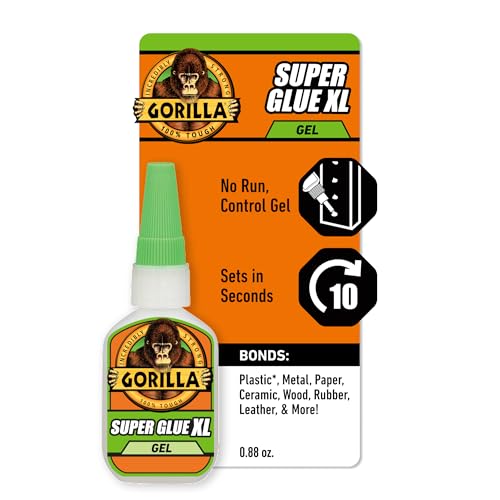
The Gorilla Super Glue Gel XL stands out with its thick, no-run formula that is perfect for vertical surfaces where liquid glues would drip. This all-purpose glue bonds a wide array of materials, including plastic, rubber, metal, and ceramic, making it a versatile tool for many household and workshop projects. Its gel consistency gives you excellent control during application.
Once cured, the adhesive dries to a crystal clear finish, keeping the focus on your project rather than the repair line. It sets quickly and forms a strong, durable bond. For a clean, controlled, and multi-surface bonding solution, this Gorilla glue gel is an excellent option to consider.
J-B Weld 33120H SuperWeld Glue

J-B Weld is a brand trusted by builders and mechanics, and their SuperWeld glue lives up to that reputation. This specially formulated cyanoacrylate super glue provides a strong, instant bond on multiple and hard-to-bond surfaces. It is designed to perform in tough environments, ensuring your repairs can handle stress and vibration.
The applicator tip is designed for precision, allowing you to pinpoint the smallest spot and apply the adhesive evenly. It bonds in just seconds, making it a great choice for quick fixes and permanent repairs alike. If you need a professional-strength instant adhesive that you can count on, J-B Weld SuperWeld is a reliable pick.
3M Scotch-Weld Plastic & Rubber Instant Adhesive PR1500

The 3M Scotch-Weld PR1500 is another excellent instant adhesive from 3M, distinguished by its medium viscosity. This formulation is a great middle-ground, being thick enough to resist running on slightly uneven surfaces but still fluid enough to spread well. Like the PR40, it is formulated to bond a number of substrates, including plastics and rubbers.
The container offers the same precise application control, letting you dispense anything from a tiny drop to a continuous bead. This adhesive is perfect for situations where you need a bit more body to the glue to fill minute gaps without sacrificing the fast-setting properties of a cyanoacrylate.
Gorilla Max Strength Construction Adhesive

When you need a heavy-duty, gap-filling solution, the Gorilla Max Strength Construction Adhesive is a formidable option. This clear adhesive is reportedly twice as strong as their heavy-duty formula, providing an incredibly tough bond for demanding projects. Its waterproof nature makes it suitable for both indoor and outdoor use, even when fully submerged.
This adhesive is formulated for virtually all projects and repairs, creating a durable bond on a wide range of materials. The crystal clear finish ensures a discreet result. For bonding larger rubber and plastic components where there might be uneven surfaces or small gaps, this construction adhesive provides the strength and flexibility required.
Gorilla Clear Grip Waterproof Contact Adhesive

Gorilla Clear Grip is a unique contact adhesive that bonds in seconds without requiring clamping. This feature is incredibly useful for hard-to-clamp surfaces or for speeding up your workflow. It provides a crystal clear finish, making it ideal for visible repairs and crafts where you want the bond to be invisible.
As a 100% waterproof formula, it is built to last through the elements, making it a great choice for both indoor and outdoor applications. The fast-grab formula ensures the materials stay in place almost immediately after contact. For a quick, strong, and invisible bond on rubber and plastic, this contact adhesive is a superb solution.
J-B Weld 50139 Plastic Bonder

For the strongest possible repair on challenging plastics and rubber, the J-B Weld Plastic Bonder is a two-part urethane adhesive system. This product is designed for quick-set, lasting repairs on thermoset plastics, carbon fiber composites, thermoplastics, and more. It works as both an adhesive and a gap filler, making it perfect for repairing cracks or bonding uneven surfaces.
It has a simple 1:1 mixing ratio and sets in 15 minutes, allowing ample time for positioning. After curing, it can be sanded and painted, and with a tensile strength of 3770 psi, it creates a hard, permanent bond that is built to last. This is the go-to for high-strength, structural repairs.
Barge All Purpose Cement
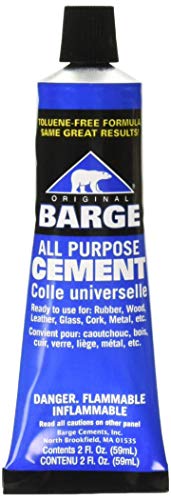
Barge All Purpose Cement is a legendary adhesive in industries like footwear and upholstery, known for creating an incredibly strong and flexible bond. This industrial-use cement provides a powerful connection with just one coat. Its easy-to-spread, non-smearing formula is user-friendly and delivers professional results.
The cement is waterproof and remains flexible after curing, which is crucial for materials like rubber and plastic that may expand, contract, or flex during use. This flexibility prevents the bond from becoming brittle and cracking over time. For a time-tested, flexible, and durable bond, Barge Cement is a top contender.
Loctite Plastics Bonding System
The Loctite Plastics Bonding System is a specialized two-part adhesive that includes a primer to prepare the surface of difficult-to-bond plastics. This system is engineered to tackle polypropylene and polyethylene plastics, which are notoriously resistant to most standard glues. The primer activates the plastic surface, allowing the adhesive to form a powerful, permanent bond.
This kit is the solution for bonding rubber to these challenging plastics where other adhesives fail. It dries clear and sets without clamping, making it convenient for a variety of repair projects. If you are working with hard-to-bond plastics, this system provides the technology needed for a successful outcome.
Buying Guide: How to Choose the Right Adhesive for Rubber to Plastic
Finding the perfect adhesive for a rubber to plastic bond can feel like a puzzle. I’ve glued my fair share of materials, and the key is understanding that not all glues are created equal. The main challenge is that rubber is flexible and plastic can be slick, so you need a product that can handle both. The first thing I always look at is the type of plastic. Plastics like polyethylene (PE) and polypropylene (PP) are notoriously difficult to bond because they have a non-porous, “low-surface-energy” finish. For these, you often need a specialized plastic adhesive or a primer to prepare the surface. For other plastics like PVC, ABS, or acrylic, you have many more options.
Next, consider the type of rubber. Is it natural rubber or a synthetic variety like silicone, EPDM, or neoprene? Silicone rubber, in particular, requires a specific type of adhesive, often another silicone-based formula like a silicone sealant or a specialized rubber cement designed for it. For most common rubbers, cyanoacrylate (super glue) is a fantastic, fast-grabbing option for small, non-flexible areas. For bonds that need to endure flexing, vibration, or impact, a flexible epoxy or a polyurethane-based adhesive is my go-to. These types cure into a tough, yet pliable, solid that moves with the materials instead of cracking.
The project’s requirements are just as important as the materials. Ask yourself a few questions. Is this for indoor or outdoor use? Outdoor adhesives need to withstand UV light, moisture, and temperature swings. What is the gap you’re filling? A thick, gap-filling adhesive like a polyurethane sealant is better for uneven surfaces, while a thin liquid like super glue is ideal for tight, snug fits. How fast do you need it to set? For quick repairs, instant adhesives are unbeatable, but for maximum strength, a slower-curing epoxy or contact cement that you allow to dry before joining might be the stronger choice. Finally, think about the final look. Some adhesives dry clear, while others have a yellow or white tint. For visible repairs, a clear-drying formula is usually best.
My final piece of advice is to never skip the surface prep. I can’t stress this enough. No matter how good your adhesive is, a dirty or oily surface will lead to failure. I always clean both the rubber and plastic with isopropyl alcohol to remove any mold release agents, dirt, or oils. For very smooth plastics, a light sanding can provide some “tooth” for the adhesive to grip onto, dramatically improving the bond strength. Taking these few extra minutes makes all the difference in creating a durable, long-lasting bond between your rubber and plastic surfaces.
FAQ
What is the strongest adhesive for bonding rubber to plastic?
“Strongest” can mean different things. For a rigid, incredibly durable bond on a variety of plastics and rubbers, a two-part epoxy is often considered the strongest in terms of sheer tensile strength. However, if you need a bond that remains flexible and can withstand bending, a high-quality polyurethane adhesive might be the “strongest” choice for your specific application. It really depends on whether you need brute force or flexible strength.
Will super glue work on rubber and plastic?
Yes, standard cyanoacrylate super glue can work very well for bonding rubber to plastic, especially on small, non-stressful projects. It bonds quickly and strongly to many materials. The catch is that it creates a very hard, brittle bond. If the finished part will be flexed or bent at all, the super glue joint is likely to crack. I use it for firm, static bonds but avoid it for anything that needs to move.
How do I prepare the surfaces before gluing?
Surface preparation is the most critical step for a successful bond. First, make sure both the rubber and plastic are completely clean and dry. I wipe them down thoroughly with a cloth and isopropyl alcohol to remove any invisible oils, dust, or silicone residues. For glossy plastics, I gently scuff the bonding area with fine-grit sandpaper to create a slightly rough surface. This gives the adhesive much more surface area to grip onto. Just remember to wipe away any sanding dust with alcohol afterward.
Why did my previous adhesive bond fail?
Adhesive failure usually comes down to a few common issues. The most likely culprit is improper surface preparation, like not cleaning off oils or not sanding a slick plastic. Another reason is using the wrong type of adhesive for the materials; for example, using a rigid glue on a part that flexes. Environmental factors can also be to blame, such as using an indoor adhesive for an outdoor project where it was exposed to water and UV rays, causing it to degrade.
Can I use a hot glue gun for rubber and plastic?
You can, but I only recommend it for very temporary, low-strength holds, like in crafts or to hold something in place while a proper adhesive cures. Hot glue doesn’t offer much chemical or mechanical bonding power. It tends to peel away from smooth plastics and doesn’t adhere well to many types of rubber, especially when subjected to heat or stress. For a permanent repair, it’s worth using one of the dedicated adhesives for bonding rubber to plastic surfaces.
How long should I let the adhesive cure?
This varies massively by product. Instant adhesives set in seconds but can take 24 hours to reach full strength. Two-part epoxies might be handleable in 5-10 minutes but need 12-24 hours to fully cure. Flexible polyurethane adhesives often require even longer, sometimes 24-48 hours, especially in humid conditions. The package directions are your best friend here. I always err on the side of caution and give it more time than the minimum stated, especially if the bond will be under any stress.