Tackling vehicle maintenance at home requires the right tools, and a reliable floor jack is arguably the most critical for safe and efficient work. Whether you’re rotating tires, performing brake jobs, or conducting routine inspections, a quality jack provides the foundation for a secure workspace. The wrong choice can lead to frustration and, more importantly, safety hazards.
With numerous options available, from heavy-duty steel models to lightweight aluminum racing jacks, selecting the perfect one for your garage can be challenging. This roundup simplifies your search by highlighting eight of the best automotive floor jacks, detailing their key features and ideal use cases to help you make an informed decision for your home maintenance needs.
Our Top Picks for Automotive Floor Jacks
- Jack Boss 3 Ton Low Profile, Aluminum and Steel Racing Floor Jack
- TONDA Low Profile Car Jack, 2.5 Ton Hydraulic Trolley Floor Jack
- TONDA Floor Jack, 2 Ton Hydraulic Car Jack for Sedan and Coupe
- Tonda Floor Jack, Hydraulic Portable Car Jack, 2 Ton Capacity
- AV Steel Floor Jack 2.5 Ton, Low Profile Floor Jack
- BIG RED T10152 Torin Steel Scissor Lift Jack Car Kit
- Pittsburgh Automotive 3 Ton Heavy Duty Steel Floor Jack
- Pro-LifT F-2315PE Grey Hydraulic Low Profile Floor Jack
Jack Boss 3 Ton Low Profile, Aluminum and Steel Racing Floor Jack
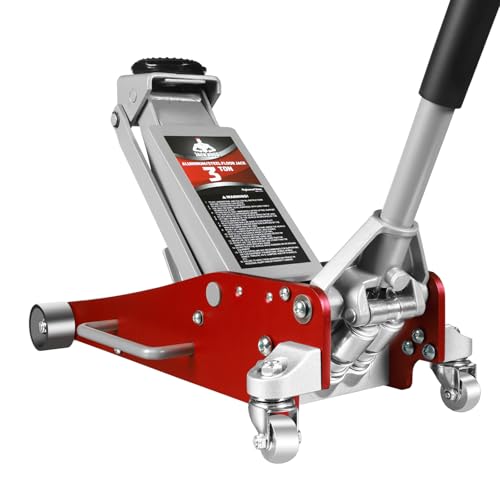
This Jack Boss model is a robust solution for enthusiasts working on low-clearance vehicles. Its hybrid aluminum and steel construction offers a good balance between durability and manageable weight, coming in at 58.5 pounds. The low profile design starts at just under 4 inches, making it simple to slide under sportier cars, while the 18.3-inch maximum lift provides ample working room.
The dual-piston quick-lift pump is a significant benefit, allowing you to reach the desired lifting height with fewer pumps compared to single-piston designs. A large rubber saddle helps protect your vehicle’s frame or lift points from damage. With a 3-ton (6,600 lb) capacity, it is well-suited for most sedans, SUVs, and smaller trailers, providing reliable performance for a variety of home garage tasks.
TONDA Low Profile Car Jack, 2.5 Ton Hydraulic Trolley Floor Jack

For those seeking a capable and mobile low-profile jack, the TONDA 2.5-ton model is a strong candidate. Its 3.35-inch minimum height accommodates many modern vehicles with low front bumpers, lifting them to a maximum of 14.57 inches. The 5,000-pound capacity is sufficient for the majority of cars and mid-size SUVs on the road.
Maneuverability is a key strength of this floor jack. It is outfitted with two large steel casters and two 360-degree swivel casters, allowing it to roll smoothly across your garage floor and position precisely. The detachable long handle further enhances storage and transport convenience, making this a practical choice for home garages and workshops where space is considered.
TONDA Floor Jack, 2 Ton Hydraulic Car Jack for Sedan and Coupe

This 2-ton TONDA floor jack is engineered for basic maintenance on standard sedans and coupes. With a lifting range from 4.9 inches to 11.8 inches, it is well-matched for vehicles that do not have an especially low ground clearance. Its construction complies with ANSI/ASME PALD 2014 standards, which is a mark of its design integrity.
Built with heavy-duty steel and a rust-resistant finish, this jack is made for long-term use in a typical home garage environment. An integrated safety valve provides protection against overloading, adding a layer of security to your lifting operations. It is a straightforward and reliable tool for common jobs like tire changes.
Tonda Floor Jack, Hydraulic Portable Car Jack, 2 Ton Capacity

Another dependable 2-ton option from Tonda, this blue hydraulic jack shares a similar lifting range (4.9″ to 11.8″) with its sibling, making it ideal for most standard cars. Its primary focus is on combining safe operation with easy maneuverability for the user. The built-in safety bypass system is a critical feature that prevents overloading.
This model is designed for smooth movement around the garage. It features two large steel casters and two 360-degree swivel casters, allowing you to guide it into position with minimal effort. The overall lightweight design further contributes to its portability, making it a good choice for those who need to store their jack away after use.
AV Steel Floor Jack 2.5 Ton, Low Profile Floor Jack

The AV Steel Floor Jack provides a 2.5-ton (5,500 lb) capacity with a versatile low-profile lifting range from 3.4 to 14.6 inches. This combination allows it to service a wide array of vehicles, from low-slung cars to taller SUVs. The single-piston hydraulic pump is designed for quick lifting to the desired working height.
Safety and stability are addressed with an integrated overload protection valve, which helps prevent accidental overloading of the jack. A large 360-degree rotating saddle increases stability and helps protect your vehicle’s contact points. Two rotating wheels aid in positioning the jack smoothly under your vehicle.
BIG RED T10152 Torin Steel Scissor Lift Jack Car Kit
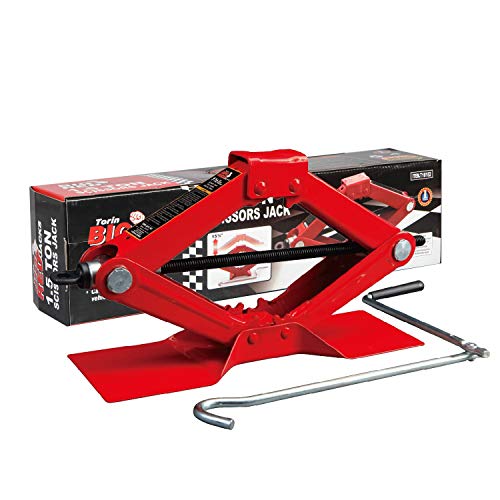
The BIG RED Scissor Jack offers a compact and highly portable alternative to trolley-style floor jacks. With a 1.5-ton (3,000 lb) capacity, it is perfectly suited for use as a reliable replacement for the jack that comes with your vehicle or as an emergency tool to keep in your trunk. Its collapsible, compact design takes up very little space.
Despite its small size, it offers an impressive lifting range from 4-1/8 inches to 15-1/8 inches. The scissor mechanism is engineered from drop-forged alloyed steel, providing significant strength and durability for its class. This is a practical and space-saving solution for specific lifting needs where a large floor jack is not required.
Pittsburgh Automotive 3 Ton Heavy Duty Steel Floor Jack
This Pittsburgh Automotive floor jack is a heavy-duty workhorse built for demanding tasks. With a 3-ton capacity, it can handle larger vehicles like trucks and SUVs with confidence. The all-steel construction is designed to withstand the rigors of frequent use in a home garage setting, providing long-lasting performance.
It is engineered for stability and power, making it suitable for a wide range of maintenance and repair jobs. The wide base and sturdy frame contribute to a secure lift, which is essential when working underneath a vehicle. For those needing substantial lifting power for heavier vehicles, this jack is a formidable option.
Pro-LifT F-2315PE Grey Hydraulic Low Profile Floor Jack
The Pro-LifT F-2315PE is a low-profile hydraulic jack designed to meet the needs of modern vehicles with minimal ground clearance. Its grey finish gives it a professional appearance, while its design focuses on fitting under low-hanging bumpers and side skirts. This makes it an excellent tool for sports cars and other low-slung vehicles.
It incorporates a reliable hydraulic system for smooth and controlled lifting. The low-profile design does not sacrifice lifting height, providing adequate room to place jack stands and perform work. For garage enthusiasts with a focus on performance vehicles, this jack offers the specialized access required.
Buying Guide: How to Pick the Right Automotive Floor Jack
Choosing the right floor jack for your home garage isn’t just about picking the one with the biggest number on the box. I’ve learned that a few key factors make the difference between a tool that makes your life easier and one that collects dust. Let’s break down what you should actually look for.
First up is weight capacity. This is the maximum weight the jack can safely lift. For most sedans and smaller SUVs, a 2-ton (4,000 lb) jack is plenty. But if you’re working on a larger truck or SUV, you’ll want to step up to a 3-ton (6,000 lb) model. I always suggest getting a jack with a capacity that exceeds your vehicle’s weight. It provides a safety buffer and often means the jack is built with more robust components. Remember, the weight you see on your vehicle’s registration is the curb weight; you need a jack that can handle that.
Next, consider the lift range. This has two parts: the minimum saddle height and the maximum lift height. A low minimum height is crucial for getting under cars with low ground clearance. Look for something around 3 inches. The maximum lift height determines how high you can raise your vehicle. For most basic maintenance like tire rotations, 20 inches is often sufficient, but if you need more workspace, aim for a jack that lifts to 21 inches or higher.
Then there’s the jack’s weight and construction. If you need to move the jack around frequently or store it in a tight space, a lighter aluminum racing jack is a dream. They’re easy to carry but usually come with a higher price tag. For most home mechanics, a sturdy steel jack is a more affordable and durable workhorse, though it will be significantly heavier.
Don’t forget about the pump mechanism. A dual-piston hydraulic pump is what you’ll find on most quality jacks. It provides a smooth, quick lift with fewer pumps. A single-piston pump will still get the job done but might require more effort and pumps to reach the desired height. Also, pay attention to the release valve. A fine-control valve allows you to lower the vehicle slowly and precisely, which is a major safety feature.
Finally, think about the little things. A large, swiveling saddle protects your vehicle’s lift points from damage. Sturdy, well-placed carry handles make moving the jack safer and easier. And don’t overlook the warranty—it’s a good indicator of the manufacturer’s confidence in their product. When you’re looking at the 8 best automotive floor jacks for home vehicle maintenance, these are the details that separate the good from the great.
FAQ
What is the difference between a floor jack and a jack stand?
This is a critical safety point. A floor jack is for lifting the vehicle. It uses hydraulic pressure to raise the car, but it is not designed to hold that weight for an extended period while you work. A jack stand is a simple, mechanical support that you place under the vehicle after it’s lifted. You lower the car onto the jack stands, which then securely holds the weight. You should never, ever get under a vehicle that is supported only by a floor jack. Always use jack stands as your primary safety support.
Can I use a floor jack on any part of my car’s undercarriage?
Absolutely not. Using a floor jack in the wrong spot can cause serious damage to your vehicle’s frame, body panels, or mechanical components. You should only place the jack’s saddle on designated factory lift points. These are typically reinforced sections of the vehicle’s frame or dedicated pinch welds along the side sills. Your owner’s manual will show you exactly where these points are. If you’re unsure, it’s best to use the original scissor jack in its designated spot to lift the car first, then place your floor jack and jack stands under the proper lift points.
How often does the hydraulic fluid in a floor jack need to be changed?
There’s no strict mileage or time interval like with engine oil. For a home user, you might never need to change the fluid if the jack is stored properly. The main reason to change hydraulic fluid is if the jack starts to perform poorly—like if it won’t lift to its full height, feels spongy, or slowly sinks under load. Contamination or air in the system are the usual culprits. If you use your jack frequently or notice any performance issues, checking and potentially changing the fluid is a good step. Always refer to your jack’s manual for the specific type of hydraulic fluid required.
Are aluminum jacks better than steel jacks for home use?
It depends on your priorities. Aluminum jacks are significantly lighter, making them much easier to carry and maneuver around the garage. This is a huge advantage if you have limited storage space or need to transport the jack. However, they are generally more expensive. Steel jacks are the classic choice: they are incredibly durable, often have a higher weight capacity for the price, and are very cost-effective. The downside is their weight; they can be very heavy and cumbersome to move. For most people looking at the 8 best automotive floor jacks for home vehicle maintenance, a steel jack offers the best value, but if portability is key, aluminum is worth the investment.
Why won’t my floor jack lift anymore?
This is a common frustration. The most frequent cause is air trapped in the hydraulic system, which is usually a simple fix called “bleeding” or “purging” the jack. The process involves opening the release valve, pumping the handle a few times, then closing the valve and trying again—your manual will have specific instructions. Other causes can be low or contaminated hydraulic fluid, a worn-out pump piston seal, or a damaged release valve. Start with the bleeding process; if that doesn’t work, check the fluid level and condition.