For those who rely on a CPAP machine, a good night’s sleep is non-negotiable, even when you’re miles from the nearest power outlet. Camping, road trips, and even unexpected power outages don’t have to mean sacrificing your therapy. The right portable power solution can provide the freedom to explore without compromising your health and comfort.
Navigating the world of portable power stations and CPAP batteries can be challenging, with options ranging from compact power banks to versatile solar generators. This guide focuses on nine of the best power sources for 2025, evaluating them on capacity, portability, output options, and specific compatibility with major CPAP brands to help you find the perfect match for your adventures.
Our Top Picks for CPAP Camping Power
- EnginStar Portable Power Station 300W 296Wh Battery Bank
- Renogy 72000mAh 266Wh 12v Power Bank with 60W PD
- ALLWEI Portable Power Station 300W, 280Wh Solar Generator
- Freedom CPAP Battery Backup Power Supply, 160 Watt Hour
- GRECELL 230.88Wh Solar Generator with 60W USB-C PD
- Jackery Portable Power Station Explorer 300, 293Wh
- Jackery SolarSaga 100W Bifacial Portable Solar Panel
- ECOFLOW River 2 Portable Power Station
- BLUETTI EB3A Portable Power Station
EnginStar Portable Power Station 300W 296Wh Battery Bank

Balancing power and portability, the EnginStar power station is a strong contender for campers who need to run more than just their CPAP machine. With a 296Wh capacity and 300W pure sine wave AC output, it can reliably power your CPAP while also charging phones, laptops, and cameras. Weighing only 6.5 pounds, it is easy to pack for a weekend trip.
Its eight output ports allow you to charge several devices at once, making it a true hub for your campsite. The advanced battery management system provides protection against short circuits, overcharging, and overload, ensuring safe operation. The inclusion of two pure sine wave AC outlets means it is suitable for sensitive electronics like CPAP machines, providing stable and clean power.
Renogy 72000mAh 266Wh 12v Power Bank with 60W PD

Designed with CPAP users in mind, the Renogy power bank offers a high-capacity 266Wh solution that connects directly to compatible machines via its 12V DC port. This model is specifically noted to work with Philips DreamStation and ResMed AirSense models, though a separate adapter is required. Its focused design avoids an AC inverter, which can be more efficient for DC-powered devices.
The 2025 version features two upgraded USB-C ports, with one delivering 60W of power for fast-charging laptops. It is important to note that this unit’s large capacity means it is prohibited on airplanes, making it best for car camping and road trips. For the longest runtime, it is recommended to turn off your CPAP’s heater and humidifier.
ALLWEI Portable Power Station 300W, 280Wh Solar Generator
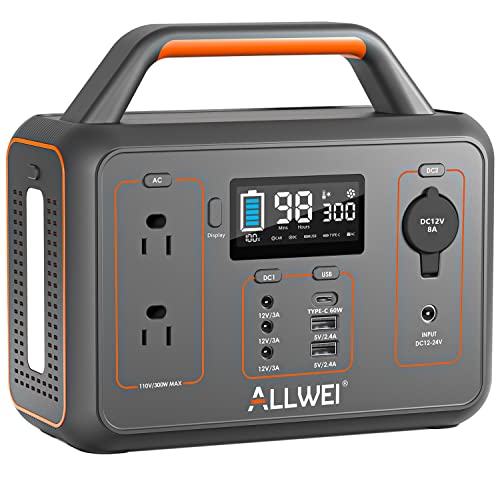
The ALLWEI solar generator provides substantial power with its 280Wh capacity and 300W rated output. Its versatility is a major benefit, offering three recharge methods: AC wall outlet, car charger, and solar panel. The built-in MPPT controller optimizes solar charging, allowing you to recharge in as little as 3-4 hours with a compatible 100W solar panel.
With nine output ports, including two pure sine wave AC outlets, this unit can power a CPAP machine and nearly all your other camping electronics simultaneously. The silent cooling fan and SOS-mode LED light add to its utility for outdoor use. It is a comprehensive power solution for those who plan extended stays off the grid.
Freedom CPAP Battery Backup Power Supply, 160 Watt Hour

If you are looking for a power supply dedicated solely to your CPAP machine, the Freedom battery is a purpose-built option. Its 160Wh lithium-ion battery is designed specifically for travel and camping, with a compact form factor that prioritizes this single task. It is compatible with a wide range of popular CPAP models from ResMed and Philips.
The runtime will vary based on your machine’s pressure settings and whether you use heated humidification. Disabling these heating functions will significantly extend the battery life, allowing for multiple nights of use on a single charge. This model is a straightforward, no-fuss solution for users who want a battery that focuses exclusively on CPAP therapy.
GRECELL 230.88Wh Solar Generator with 60W USB-C PD

The GRECELL power station offers a robust 330W pure sine wave AC output from a 230.88Wh battery, capable of handling not just CPAP machines but also smaller appliances like mini-refrigerators. Its upgraded battery management system emphasizes safety with built-in protections against overload, overcharge, and short circuits.
Charging speed is a highlight, with a USB-C Power Delivery port that can output 60W for rapidly charging modern laptops and phones. The dual cooling fans operate quietly to maintain a safe temperature during use. This balance of power, safety features, and fast-charging capabilities makes it a reliable choice for various outdoor scenarios.
Jackery Portable Power Station Explorer 300, 293Wh

From a well-known brand in portable power, the Jackery Explorer 300 provides a trusted 293Wh power source. It features two pure sine wave AC outlets, delivering a stable 300W of power that is safe for sensitive medical equipment like CPAP machines. Weighing 7.1 pounds, it remains portable enough for most camping trips.
A significant advantage is its fast recharge time, reaching 80% capacity in just 2 hours when using a wall outlet and the 60W USB-C input simultaneously. With six output ports, it can power a CPAP machine and recharge your other essential devices. Its reputation for reliability makes it a popular choice for outdoor enthusiasts.
Jackery SolarSaga 100W Bifacial Portable Solar Panel

For extended camping trips, a solar panel is essential for keeping your power station charged. The Jackery SolarSaga 100W features an innovative bifacial design that captures light on both sides of the panel, increasing total power output by up to 30%. This can significantly reduce the time needed to recharge a compatible Jackery power station.
With a high energy conversion rate of 25%, it efficiently turns sunlight into usable power. The panel is foldable and includes a convenient kickstand for easy setup on any surface. This accessory is the perfect companion for any Jackery power station, enabling true energy independence while off-grid.
ECOFLOW River 2 Portable Power Station
The ECOFLOW River 2 series is recognized for its incredibly fast charging technology, capable of reaching a full charge in just over an hour with a standard AC outlet. This is a major benefit for campers who have limited access to power between trips. These stations provide stable, clean power suitable for CPAP machines and other sensitive electronics.
Models in the River 2 line often feature a compact and user-friendly design with multiple output options, including AC, USB-C, and DC ports. The reliable lithium iron phosphate (LiFePO4) battery technology in some models offers a long lifespan and enhanced safety, making it a solid investment for frequent use.
BLUETTI EB3A Portable Power Station
The BLUETTI EB3A is a compact yet powerful unit that is ideal for users who need a balance of capacity and portability. It features a variety of outputs, including AC outlets with pure sine wave output, making it safe for CPAP machines. Its modern design includes fast-charging USB-C PD ports to keep your personal devices powered up.
One of its standout features is the ability to be recharged via solar input, giving you the flexibility to extend your power supply while camping. The unit is built with a robust battery management system for safety and longevity. For those seeking a reputable brand in a smaller form factor, the EB3A is a compelling option.
Buying Guide: How to Choose the Best CPAP Camping Battery
When I’m planning a camping trip, making sure my CPAP machine has reliable power is non-negotiable. It’s not just about comfort; it’s about my health and safety. Choosing the right battery for CPAP camping can feel overwhelming with all the technical specs, so I break it down into a few key areas I always check.
First and foremost, I look at battery capacity, which is measured in watt-hours (Wh). This is the most important number because it tells me how much energy is stored. To figure out what I need, I check my CPAP’s power consumption without the humidifier or heated tube, as those are massive power drains. I take the machine’s wattage, multiply it by the number of hours I plan to sleep, and then add a 20-30% buffer. For a typical weekend trip, I find a battery in the 150-300Wh range usually does the trick for just the machine itself.
The battery chemistry is another big decision. I see a lot of Lithium Iron Phosphate (LiFePO4) batteries now, and I prefer them. They’re safer, last for many more charge cycles, and are more stable than older lithium-ion types. They are a bit heavier, but for me, the peace of mind is worth it. I also make sure the battery has the right output ports. A pure sine wave AC inverter is essential for CPAPs with integrated humidifiers, as it provides clean, stable power that won’t damage the sensitive electronics. For machines that can run on DC power, using a DC converter cord is way more efficient and gives me significantly more runtime from the same battery.
Finally, I consider the physical aspects. Weight and size matter a lot when I’m packing my gear into a car or a campsite. I also look for useful features like a built-in flashlight, multiple USB ports for charging my phone, and a clear display that shows remaining power and input/output levels. By focusing on capacity, chemistry, outputs, and portability, I can confidently pick a power source that lets me sleep soundly, no matter how far from the grid I wander. This approach is central to my search for the 9 best batteries for CPAP camping in 2025.
Frequently Asked Questions
How many nights will a CPAP battery last while camping?
This is the most common question I get, and the answer is, “it depends.” It completely hinges on your specific CPAP model, your pressure settings, and whether you use a humidifier or heated tube. Using the humidifier will drain a battery incredibly fast, often in just a few hours. If you run your CPAP in “DC mode” without humidity, a quality 150-200Wh battery could potentially last for two nights, assuming around 8 hours of sleep per night. I always recommend testing your setup at home first to know exactly what to expect.
Can I use a regular car battery to power my CPAP?
Technically, yes, but I would strongly advise against it. A standard car starting battery isn’t designed for the slow, deep discharge that a CPAP requires. Doing so can permanently damage the battery and leave you stranded. If you want to use a 12V system like your car, you should use a dedicated deep-cycle battery, like those made for RVs or trolling motors, or a portable power station that’s specifically designed for this kind of application. They are much safer and more reliable.
Do I need a special power cord for my CPAP battery?
Often, yes. If your power station has a DC output (like a car outlet), you’ll likely need a manufacturer-specific DC converter cord for your CPAP machine. This cord plugs into the DC port and the other end goes directly into your CPAP, bypassing the bulky AC power brick. This method is far more efficient than using the AC inverter on the power station, giving you significantly more runtime. Always check with your CPAP and battery manufacturers for the correct cord.
Are power stations with LiFePO4 batteries better for CPAP use?
In my opinion, absolutely. LiFePO4 (Lithium Iron Phosphate) batteries are a newer technology that offers significant advantages for a CPAP camping battery. They are inherently safer, with a much lower risk of fire compared to traditional lithium-ion. They also have a much longer lifespan, often lasting for 2000+ charge cycles compared to 500-1000 for lithium-ion. While they can be slightly heavier and more expensive, the investment is worth it for the safety and longevity, especially for a critical medical device.
Can I charge my CPAP battery with a solar panel?
Many modern portable power stations support solar charging, which is a fantastic option for extended off-grid trips. You’ll need to make sure the solar panel’s connector is compatible with your power station’s input port and that the panel’s wattage is appropriate. A 100W solar panel is a good starting point for topping up a battery during the day. It won’t fully charge a large battery from empty in a single day of sunlight, but it can significantly extend your power independence, making it a key feature to look for in the best batteries for CPAP camping.